 Image 1 of 5
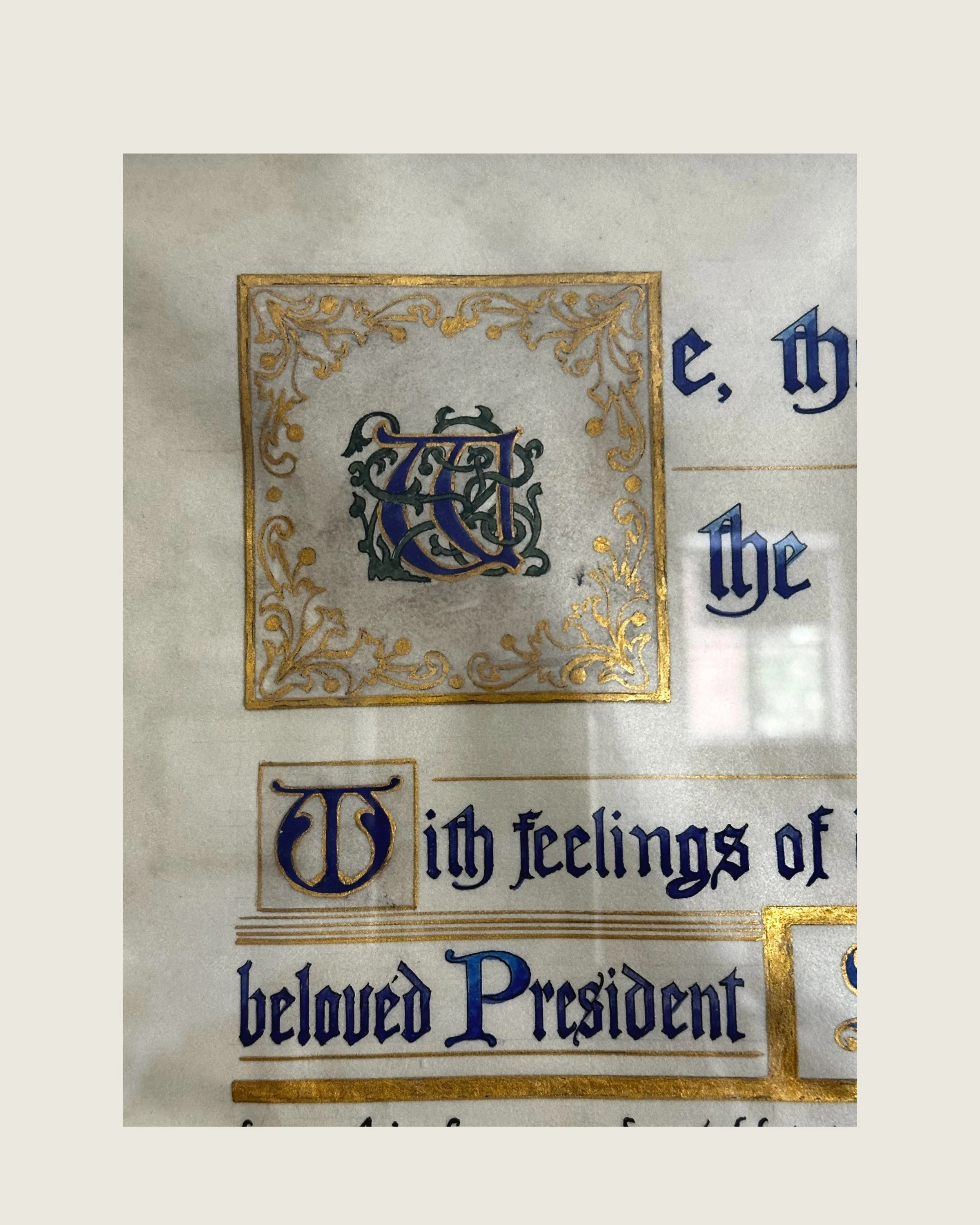 Image 2 of 5
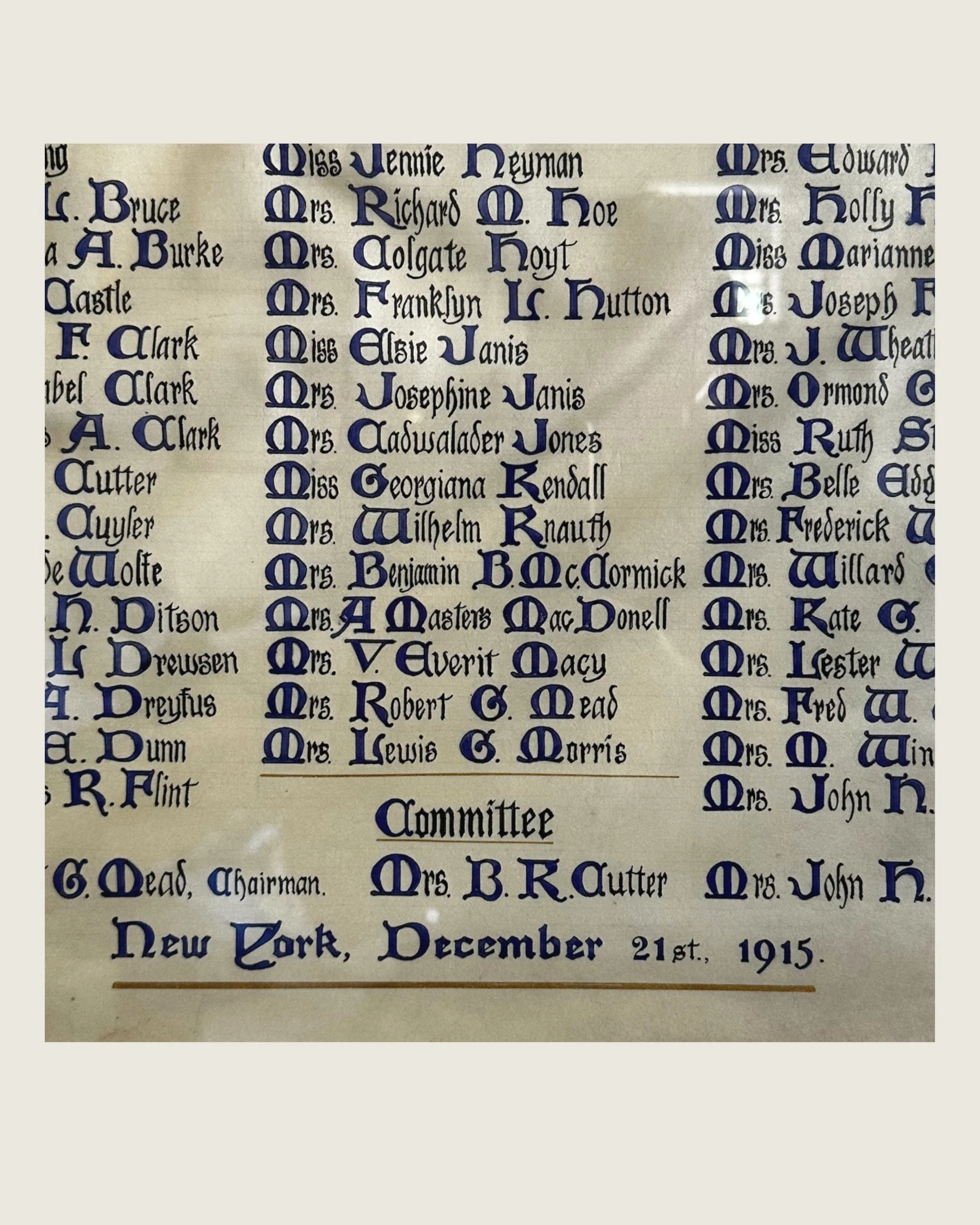 Image 3 of 5
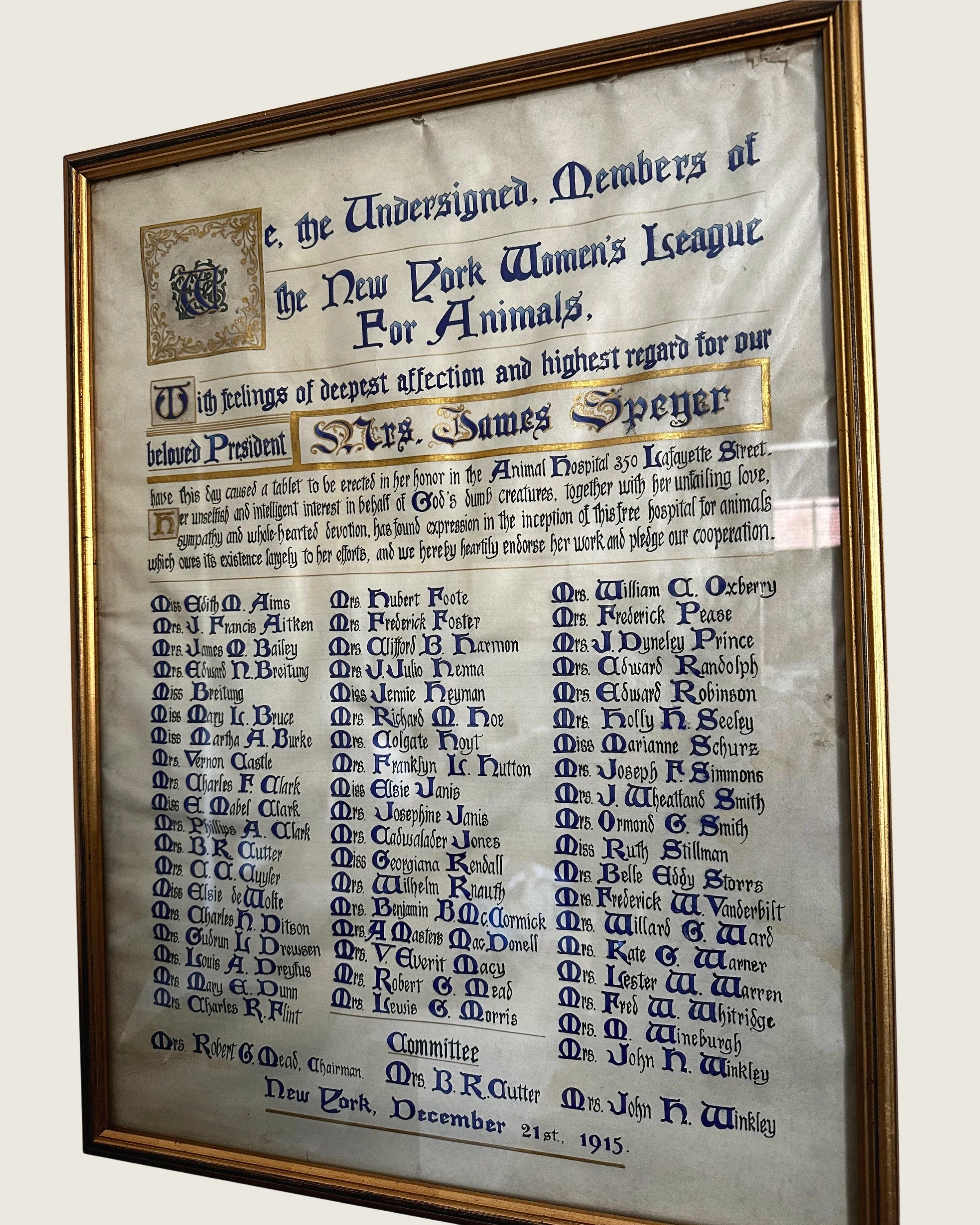 Image 4 of 5
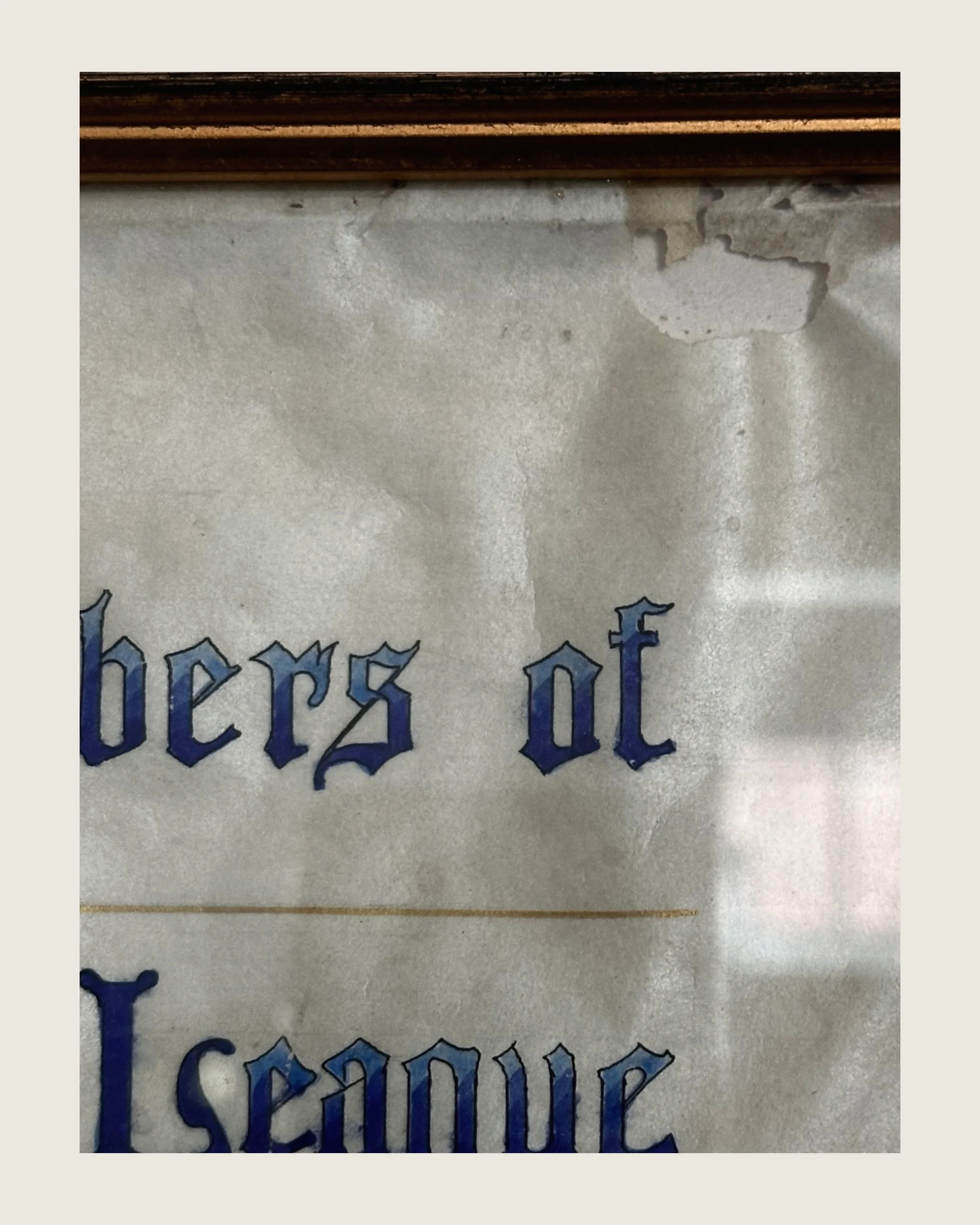 Image 5 of 5
-
Ellin Leslie Prince Speyer began organized animal-welfare work through the Women’s Auxiliary to the ASPCA. By 1910 the Auxiliary had grown to more than 120 members, and on May 12 of that year its members incorporated separately as the New York Women’s League for Animals.
Later accounts have often explained the separation as a reaction to women being denied full membership in the ASPCA. The Schwarzman Animal Medical Center, the League’s institutional successor, preserves that account but introduces it as “legend has it.” It is therefore better treated as part of the organization’s remembered history than as the fully documented cause of the separation.
The League initially operated a clinic and dispensary before raising funds for a permanent animal hospital. Speyer was instrumental in organizing that effort and securing financial support.
The hospital opened at 350 Lafayette Street in 1914. Its work extended beyond advocacy: sick and injured horses, dogs, cats, birds, and other animals could receive treatment, including animals belonging to New Yorkers unable to afford ordinary veterinary care.
Speyer remained president of the League until her death in 1921. The organization continued and ultimately developed into the institution now known as the Schwarzman Animal Medical Center.
-
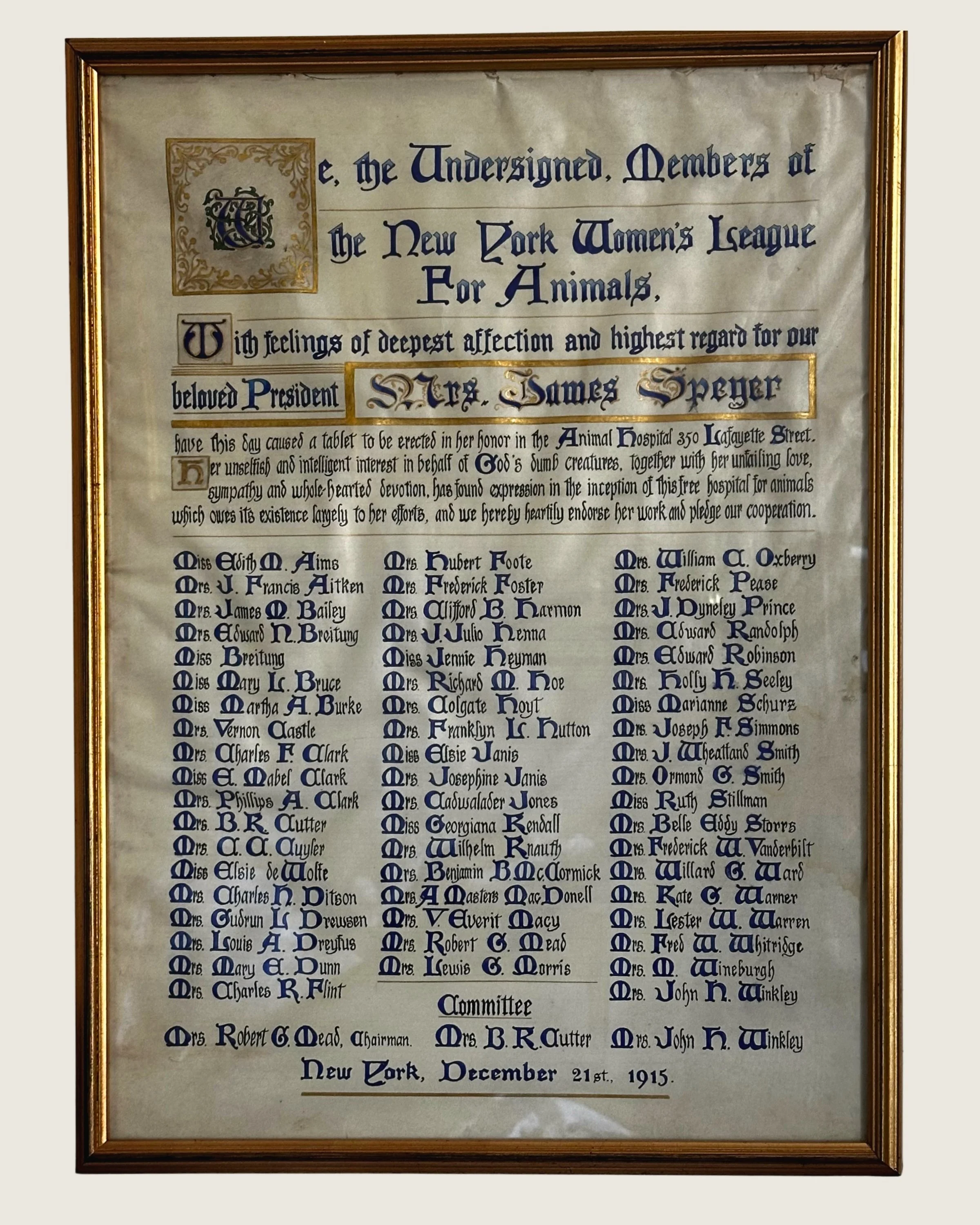
The testimonial is dated December 21, 1915, less than two years after the League’s permanent animal hospital opened on Lafayette Street.
Its text records a specific act of commemoration. The members state that they had “this day caused a tablet to be erected” in Speyer’s honor in the Animal Hospital at 350 Lafayette Street. They credit the creation of the free hospital largely to her efforts and pledge their individual cooperation toward its continued success.
The hospital building itself survives. Constructed in 1913 for the New York Women’s League for Animals, it was designed specifically for veterinary use and continued as an animal hospital for more than half a century.
No photograph, surviving inscription, or present location for the 1915 tablet has yet been identified in the available research. Nor has a contemporary program or account of the December 21 presentation been located.
The testimonial therefore provides the clearest evidence presently available for the tablet and the occasion surrounding its dedication. Whether the document was presented directly to Speyer, retained by the League, displayed at the hospital, or kept elsewhere after the ceremony remains unresolved.
-
The lower portion of the testimonial carries an extensive roster of New York Women’s League for Animals members, followed by a committee headed by Mrs. Robert C. Mead.
Several names remain immediately recognizable. Elsie de Wolfe became one of the defining figures of American interior decoration. Mrs. Vernon Castle was Irene Castle, the celebrated dancer and fashion figure. Elsie Janis was a prominent actress and entertainer. Mrs. Frederick W. Vanderbilt was Louise Holmes Vanderbilt.
They appear among dozens of other members whose names are less familiar today but who collectively reveal the social and organizational structure behind the League. The interest of the roster is therefore not simply celebrity. It records the network publicly associating itself with Speyer’s work and promising to sustain the institution she had helped create.
The names should not presently be described as autograph signatures. The document remains framed and has not been physically examined to determine whether individual names were handwritten, professionally engrossed, printed, or produced through some combination of methods.
No calligrapher, engraver, stationer, or other maker of the testimonial has yet been identified.
-
“WE, the Undersigned, Members of THE NEW YORK WOMEN’S LEAGUE FOR ANIMALS…”
…feel feelings of deepest affection and highest regard for our beloved President MRS. JAMES SPEYER, and have this day caused a tablet to be erected in her honor in the Animal Hospital 350 Lafayette Street.”
“We acknowledge her unselfish and intelligent interest in behalf of God’s dumb creatures, and are grateful that her love, sympathy and devotion have found expression in the inception of the free hospital for animals, which owes its existence largely to her efforts.”
“We hereby endorse her work and pledge our individual effort and cooperation toward its successful continuance.”