This iron knife was made for practical use. Its blade was sharpened and worked; its pale animal-bone handle was carved with a repeating geometric pattern that gave an everyday tool a degree of care and individuality.
The blade survives dark with age, while the handle retains its lozenge-section form and incised quatrefoil decoration. The handle is bovine bone, and the blade and handle are original to one another. A prior catalogue dated the knife to the seventeenth century and identified it as English or British; that dating and regional attribution remain unconfirmed.
That is part of its appeal. Seventeenth-century domestic tools often disappeared through use, loss, and replacement. This one remained. The worn iron, carved handle, and accumulated irregularities preserve the evidence of a long working life.
Date: 17th century, according to prior catalogue attribution; unconfirmed
Origin: English or British, according to prior catalogue attribution; unconfirmed
Maker / Markings: No maker’s mark recorded
Materials: Iron blade with carved bovine-bone handle; blade and handle original to one another.
Dimensions: Approximately 7¾ in. / 19.8 cm
Weight: 31.8 g
Provenance: Acquired on the UK art market before 2000; property of an Essex, UK, gentleman; TimeLine Auctions, Antiquities Sale — Day 4, 5 June 2026, lot 2300; subsequently acquired by the dealer. The pre-2000 history is recorded from the auction catalogue and has not been independently verified.
Exhibition history: Displayed at Harwich Museum from March 4 through June 7, 2026. A photograph of the object on display accompanies the sale.
Condition: Heavy overall stable corrosion and pitting to the iron blade, with substantial edge irregularity and material loss. Wear and oxidation extend across the blade surface, but the corrosion is stable. The carved bovine-bone handle shows staining, discoloration, handling wear, and minor surface irregularities. Please review all photographs closely.
This iron knife was made for practical use. Its blade was sharpened and worked; its pale animal-bone handle was carved with a repeating geometric pattern that gave an everyday tool a degree of care and individuality.
The blade survives dark with age, while the handle retains its lozenge-section form and incised quatrefoil decoration. The handle is bovine bone, and the blade and handle are original to one another. A prior catalogue dated the knife to the seventeenth century and identified it as English or British; that dating and regional attribution remain unconfirmed.
That is part of its appeal. Seventeenth-century domestic tools often disappeared through use, loss, and replacement. This one remained. The worn iron, carved handle, and accumulated irregularities preserve the evidence of a long working life.
Date: 17th century, according to prior catalogue attribution; unconfirmed
Origin: English or British, according to prior catalogue attribution; unconfirmed
Maker / Markings: No maker’s mark recorded
Materials: Iron blade with carved bovine-bone handle; blade and handle original to one another.
Dimensions: Approximately 7¾ in. / 19.8 cm
Weight: 31.8 g
Provenance: Acquired on the UK art market before 2000; property of an Essex, UK, gentleman; TimeLine Auctions, Antiquities Sale — Day 4, 5 June 2026, lot 2300; subsequently acquired by the dealer. The pre-2000 history is recorded from the auction catalogue and has not been independently verified.
Exhibition history: Displayed at Harwich Museum from March 4 through June 7, 2026. A photograph of the object on display accompanies the sale.
Condition: Heavy overall stable corrosion and pitting to the iron blade, with substantial edge irregularity and material loss. Wear and oxidation extend across the blade surface, but the corrosion is stable. The carved bovine-bone handle shows staining, discoloration, handling wear, and minor surface irregularities. Please review all photographs closely.
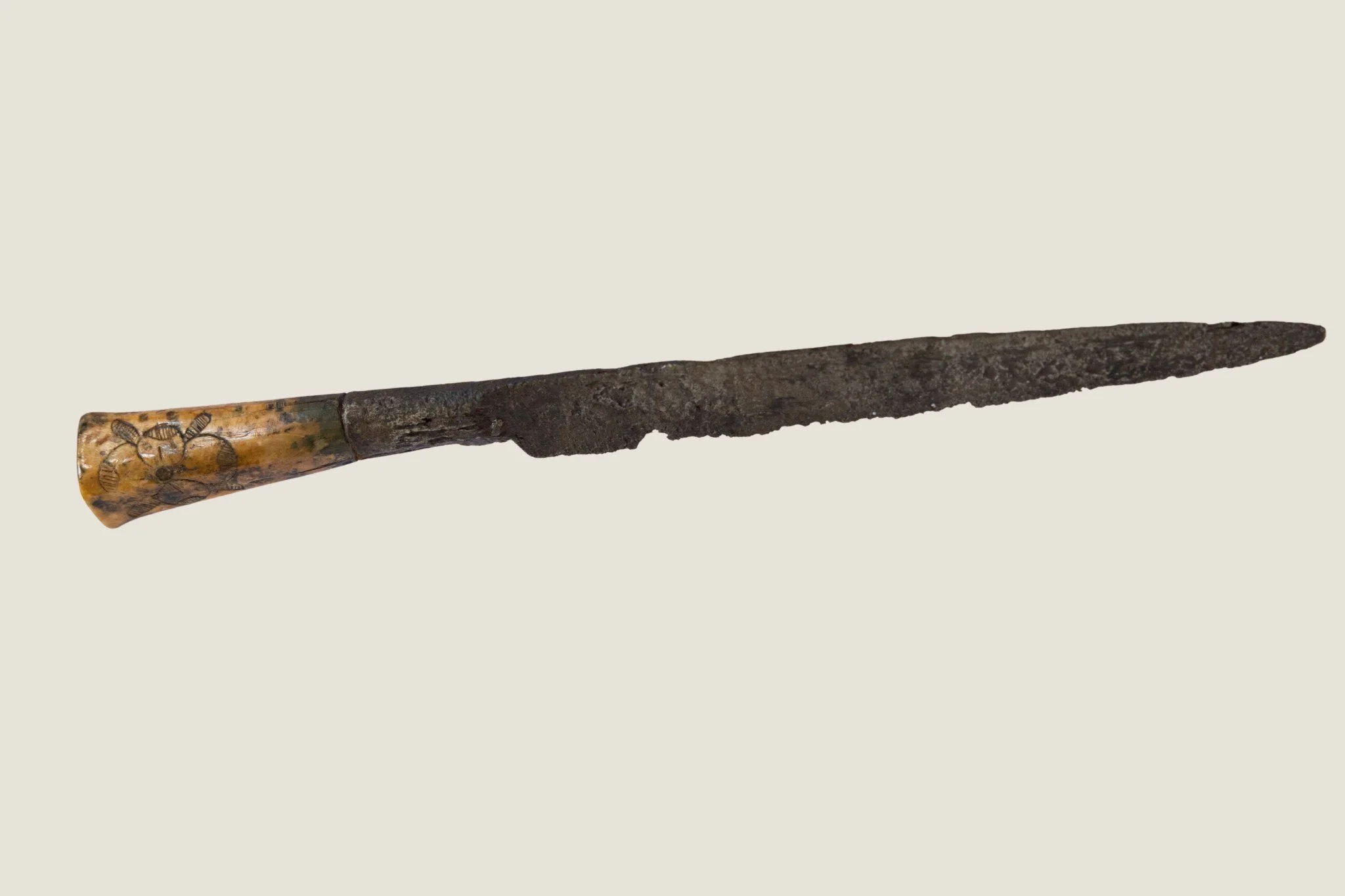 Image 1 of 5
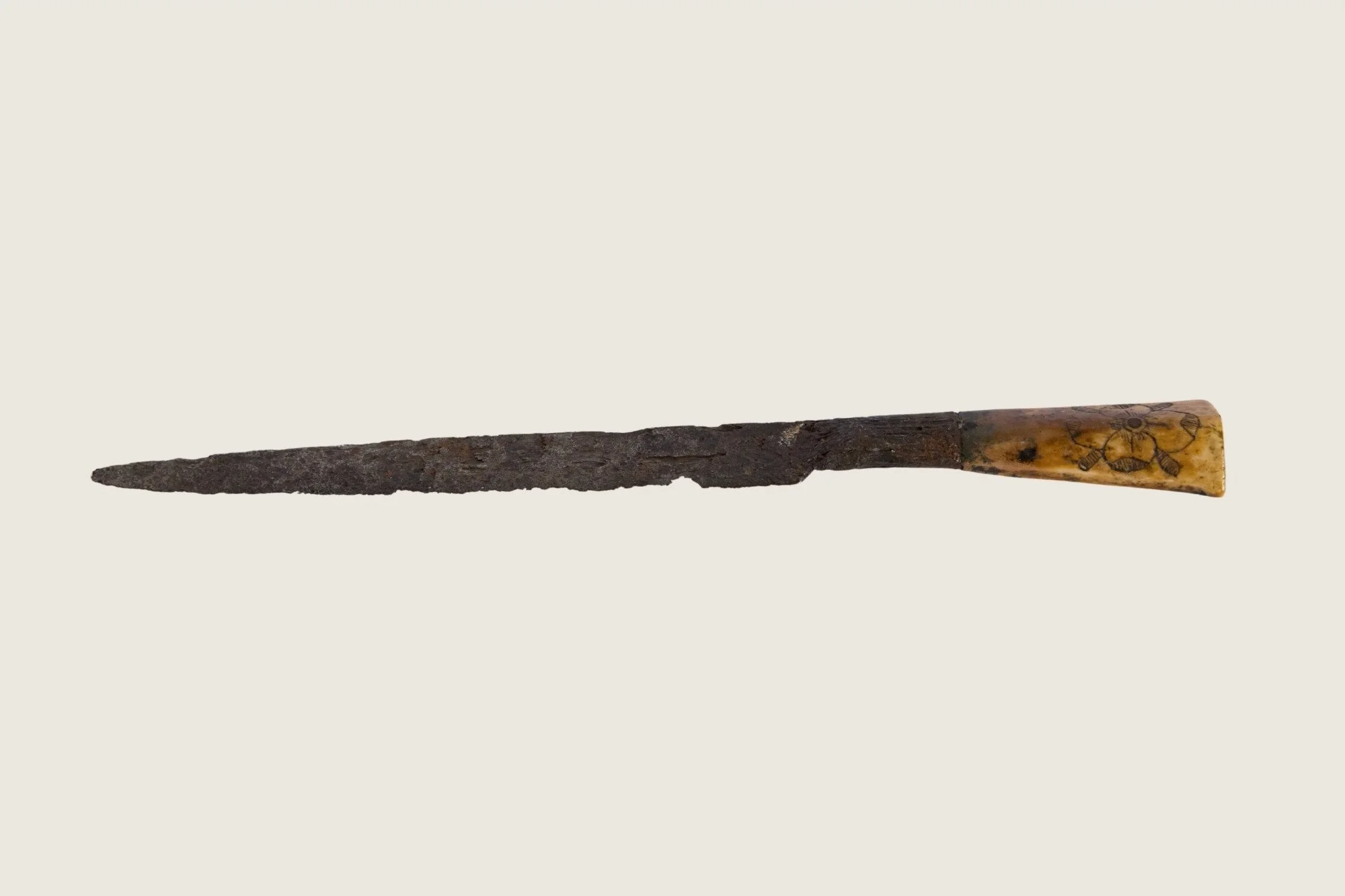 Image 2 of 5
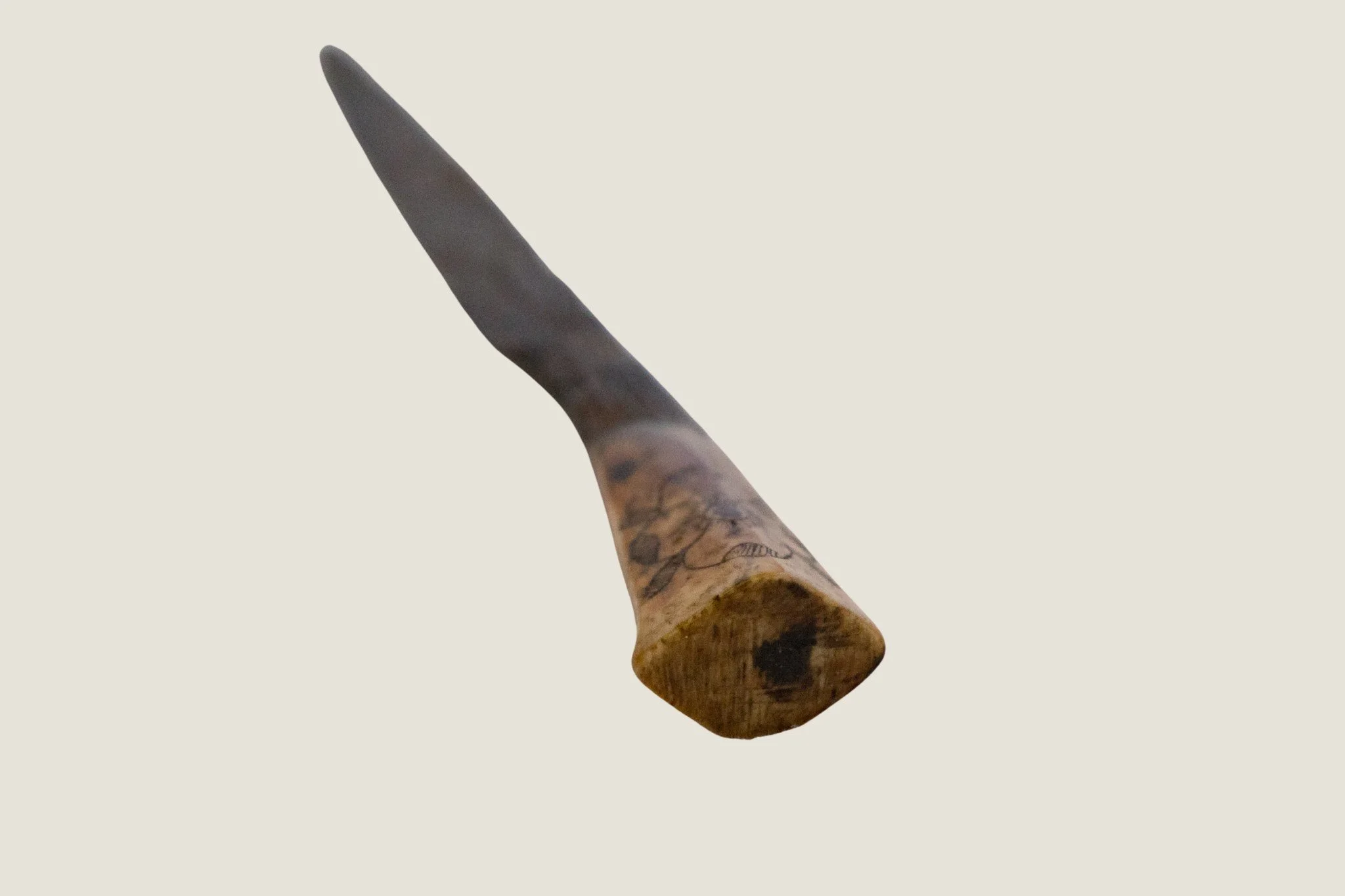 Image 3 of 5
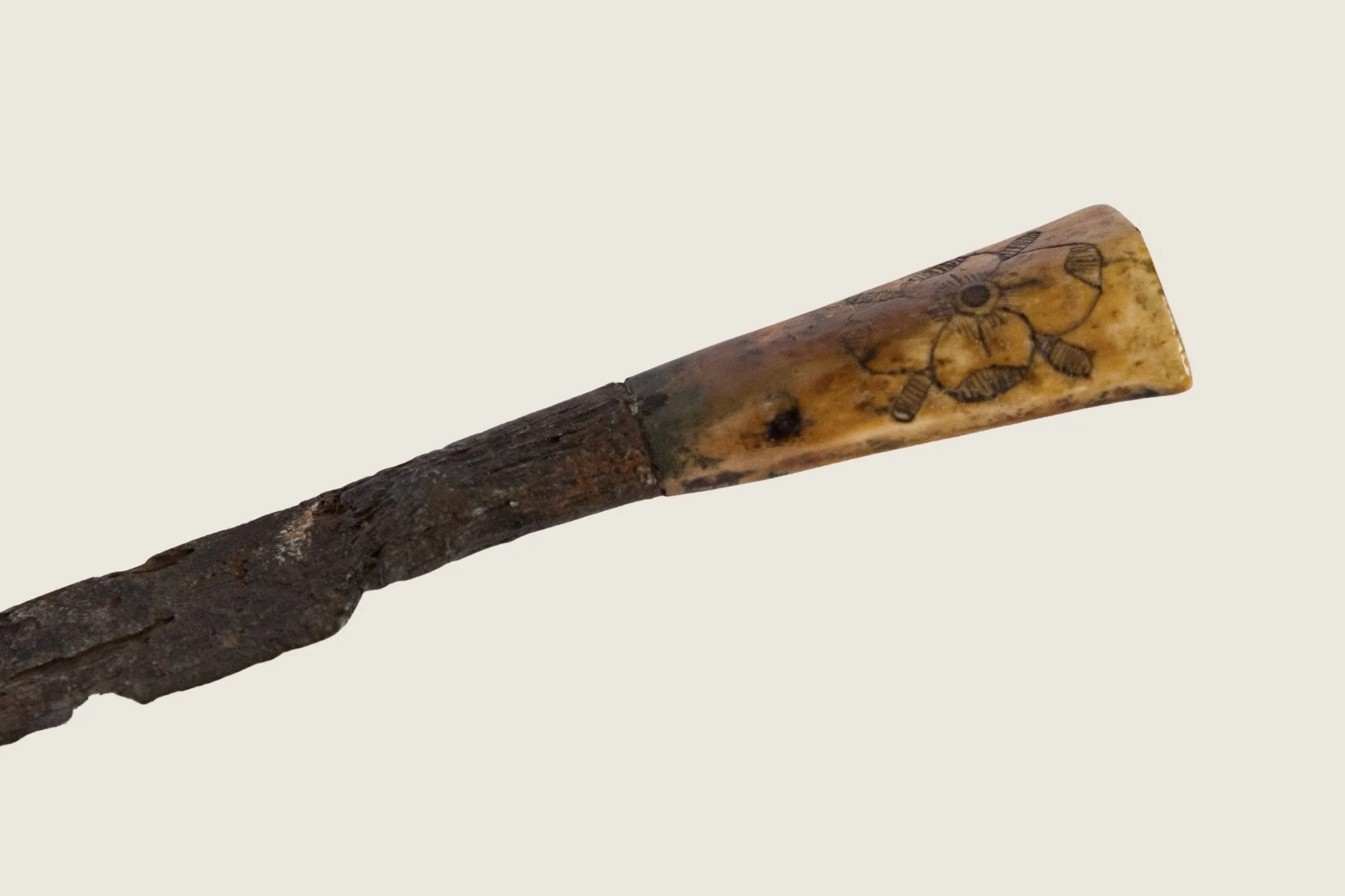 Image 4 of 5
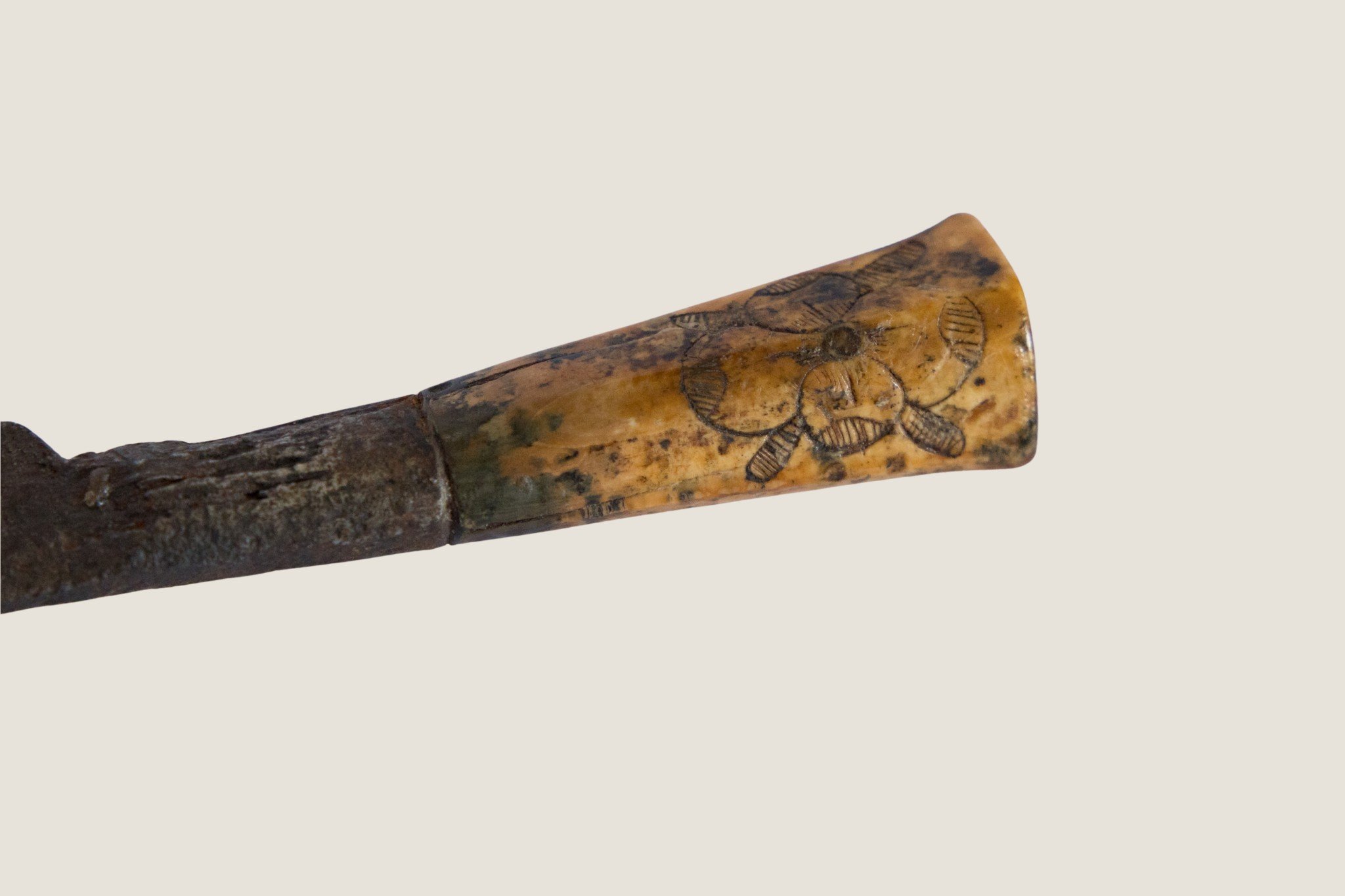 Image 5 of 5